
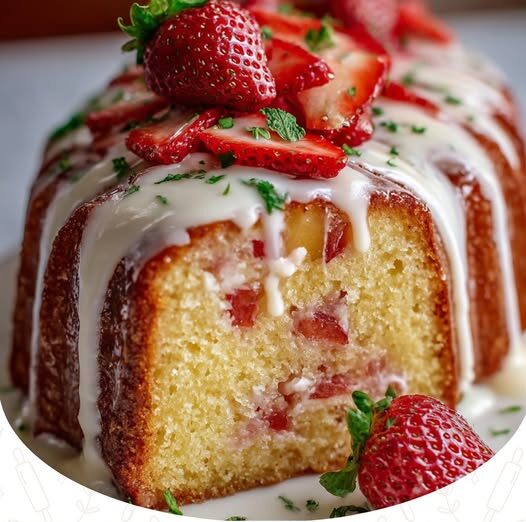
Ingredients
For the pound cake
- 1 cup (230 g) unsalted butter, softened
- 2 cups granulated sugar
- 4 large eggs, at room temperature
- 2 teaspoons vanilla extract
- 2 ½ cups all‑purpose flour
- 1 ½ teaspoons baking powder
- ½ teaspoon salt
- ½ cup sour cream or plain Greek yogurt, at room temperature
- ½ cup crushed pineapple, well drained (press out excess juice)
- 1 cup diced fresh strawberries (pat very dry with paper towels)
For the cream cheese glaze
- 4 ounces cream cheese, softened
- 1 ½ cups powdered sugar
- 2–3 tablespoons milk or heavy cream
- ½ teaspoon vanilla extract
For garnish (optional but beautiful)
- Extra fresh strawberries, sliced
- Small pineapple pieces or tidbits, well drained
- Fresh mint leaves
How to Make Strawberry-Pineapple Pound Cake
Prepare the pan and oven
I start by preheating the oven to 350°F (175°C). Then I grease a standard 9×5‑inch loaf pan (or a similarly sized loaf/bundt pan) and line the bottom with parchment paper. Greasing and lining ensures the cake releases cleanly, which is especially important for a moist pound cake with fruit. I also lightly flour the sides of the pan if I’m not using a nonstick pan.
Cream the butter and sugar
In a large mixing bowl, I beat the softened butter until smooth, then gradually add the 2 cups of granulated sugar. I keep mixing on medium speed for several minutes until the mixture is pale and fluffy. This creaming step is key: it incorporates air into the batter and gives the pound cake its lift and tender crumb without relying on a lot of chemical leavening.
Add the eggs and vanilla
Next, I add the eggs one at a time, beating well after each addition. Letting the eggs come to room temperature helps them blend in smoothly without curdling the batter. After the last egg is incorporated, I mix in the vanilla extract. At this stage, the batter should be thick, creamy, and homogenous.
Combine dry ingredients and sour cream
In a separate bowl, I whisk together the flour, baking powder, and salt. I also stir the sour cream in a small bowl to loosen it a bit. Then I add the dry ingredients to the butter mixture in two or three additions, alternating with the sour cream: a portion of dry ingredients, a spoonful of sour cream, and repeat, ending with dry ingredients. I mix on low speed just until everything is combined. Over‑mixing here can toughen the cake, so I stop as soon as no streaks of flour remain.
Fold in strawberries and pineapple
Before adding the fruit, I make sure the crushed pineapple is very well drained; I even press it gently in a sieve or between paper towels to remove excess juice. The strawberries get diced small and patted dry with paper towels so they don’t bleed too much into the batter.
I sprinkle a tablespoon or two of flour over the fruit and toss to coat lightly—this helps keep the pieces from sinking. Then I gently fold the pineapple and strawberries into the batter with a spatula. I try not to stir too aggressively so I don’t break up the fruit or overwork the batter.
Fill the pan and bake
I scrape the thick batter into the prepared pan and smooth the top with a spatula. Sometimes I lightly tap the pan on the counter to remove large air bubbles. Then the cake goes into the preheated 350°F (175°C) oven.
Baking time can range from 55 to 75 minutes, depending on the pan and oven. I start checking around 50 minutes. The cake is done when the top is deep golden, it springs back lightly when touched, and a toothpick inserted into the center comes out mostly clean, with just a few moist crumbs but no wet batter. Because pound cakes are dense, I check the center in a few spots.
If the top starts browning too quickly while the center is still underdone, I tent the cake loosely with foil and continue baking until it’s cooked through.
Cool the cake completely
Once the cake is done, I let it cool in the pan for about 10–15 minutes. Then I run a knife around the edges, gently turn it out onto a wire rack, and peel off the parchment. I let the cake cool completely before glazing—this is important, because a warm cake will melt the glaze and make it run off too quickly.
Making the Cream Cheese Glaze
While the cake cools, I prepare the cream cheese glaze. In a medium bowl, I beat the softened cream cheese until smooth and free of lumps. Then I gradually sift in the powdered sugar, mixing on low until it’s fully incorporated.
Next, I add the vanilla extract and 2 tablespoons of milk or cream. I mix until the glaze is smooth and pourable but still thick enough to cling to the cake. If it feels too thick, I add a tiny splash more milk; if it’s too thin, I whisk in a bit more powdered sugar. The goal is a glaze that flows slowly off a spoon in thick ribbons.
Glazing and Garnishing the Pound Cake
When the cake is completely cool, I set it on a serving plate or cake stand. I like to place strips of parchment under the edges of the cake to catch drips and keep the plate neat. Then I pour or spoon the cream cheese glaze over the top, letting it drip naturally down the sides. I don’t worry about perfection—the casual drips are part of the charm.
While the glaze is still soft, I decorate the top with sliced fresh strawberries and a few small pineapple tidbits, arranging them along the center of the loaf. A few tiny mint leaves add a pop of green color that looks beautiful against the white glaze and red strawberries. After decorating, I let the glaze set for at least 20–30 minutes before slicing.
Continue to the next page to reveal more tips and tricks