
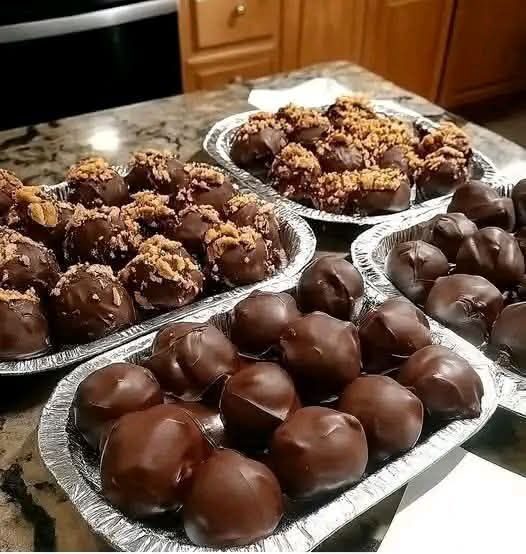
Tips for Perfect Peanut Butter Balls
- Use softened, not melted, butter. Soft butter creams smoothly into the peanut butter and sugar; melted butter can make the mixture greasy and harder to shape.
- Chill thoroughly before dipping. The colder the centers, the easier the dipping process. If you notice balls starting to soften, return the tray to the freezer for a few minutes.
- Aim for smooth, even balls. Rolling the mixture between your palms until very smooth gives the finished candies a neater look under the chocolate shell.
- Keep chocolate at dipping consistency. If it thickens, briefly rewarm it and stir until smooth again. Avoid adding water, which will cause seizing; a tiny bit of neutral oil can improve fluidity if needed.
- Work in batches. If your kitchen is warm, keep half the tray in the freezer while you dip the first half so they stay firm.
Storage and Make-Ahead
Peanut butter balls are excellent make-ahead candies and keep very well.
- Refrigerator: Store in an airtight container in the fridge for up to 2 weeks. Layer them with parchment paper to prevent sticking.
- Freezer: For longer storage, freeze in a single layer on a tray, then transfer to a freezer-safe container or bag. They keep well for 2–3 months. Thaw in the refrigerator or enjoy slightly chilled.
- Room temperature: For serving at parties, peanut butter balls can sit at cool room temperature for several hours. If your house is very warm, keep them refrigerated until close to serving time so the chocolate doesn’t soften.
Frequently Asked Questions
Can I use regular peanut butter instead of natural?
Yes. Regular creamy peanut butter works and will give a slightly sweeter, more stable center. If using natural peanut butter with separated oil, make sure it’s very well stirred and uniform before measuring so the texture isn’t oily or too loose.
Can I make these without chocolate?
You can roll the peanut butter balls in cocoa powder, powdered sugar, or finely chopped nuts instead of dipping in chocolate, but they’ll be softer and more prone to drying out. The chocolate coating helps seal in moisture and adds a firmer bite.
What kind of chocolate bark is best?
Gourmet or high-quality chocolate bark formulated for candy making melts smoothly and sets with a nice snap and shine. You can use dark, milk, or white bark depending on your preference; just avoid standard chocolate chips unless you add a bit of shortening or oil to help them set.
Why are my peanut butter balls cracking after dipping?
Cracks can happen when very cold centers are dipped into very warm chocolate. Let the melted chocolate cool slightly before dipping, and don’t keep the balls in the freezer for too long—30 minutes is usually enough.
Can I flavor or decorate them for different holidays?
Absolutely. Add a pinch of cinnamon to the peanut butter base for a warm note, drizzle with contrasting chocolate (white on dark, dark on white), or top with colored sprinkles to match holidays. Crushed pretzels, sea salt flakes, or mini chocolate chips also make fun toppings.
Conclusion and Call to Action
Peanut butter balls are a timeless, crowd-pleasing candy: creamy, rich centers wrapped in a crisp chocolate shell, with endless options for coating and decoration. They come together with basic ingredients, require no oven, and freeze beautifully, making them a staple for holiday trays, gifts, and anytime cravings.
When you make these peanut butter balls, experiment with different chocolates and coatings—plain, coconut, pecan, or sprinkled—and note which combinations vanish from the plate first. Those little observations will help you fine-tune a signature version that friends and family look forward to every year.