
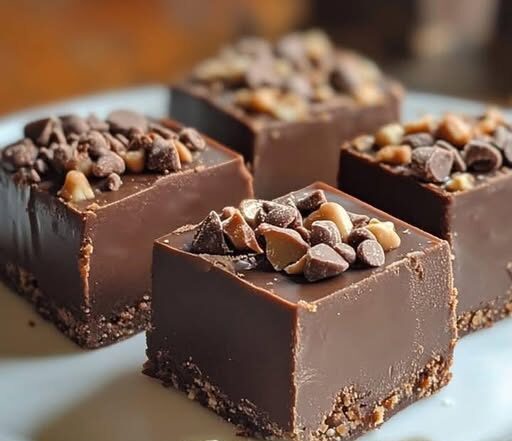
Tips for Perfect Old‑Fashioned Fudge
- Use a heavy saucepan to distribute heat evenly and reduce the risk of scorching.
- Wash down any sugar crystals on the sides of the pan with a wet pastry brush while the fudge cooks, or just avoid scraping the sides later; stray crystals can seed the whole batch and turn it grainy.
- Be patient during beating; under‑beaten fudge can stay too soft or separate, while over‑beaten fudge can seize and become crumbly. Stop when it just loses its gloss and thickens.
- Store fudge tightly covered at cool room temperature for the best texture; it usually keeps 1–2 weeks. Refrigeration is possible but can dry it out slightly.
FAQs
Why did my fudge turn out grainy?
Grainy fudge usually means sugar crystals formed too early or were introduced from the pan sides or utensils. To avoid this, don’t stir once the mixture reaches a boil, avoid scraping the pan when you pour the fudge out, and make sure you let it cool undisturbed before beating.
Can I use evaporated milk instead of regular milk?
Yes. Many Hershey‑style recipes use evaporated milk for a slightly richer, more stable fudge; you can substitute the same amount of evaporated milk for whole milk if you like. The cooking and soft‑ball‑stage steps remain the same.
Do I have to use a candy thermometer?
A thermometer makes things easier and more reliable, but the traditional cold‑water test works too. Drop a little cooked mixture into a cup of very cold water; if you can gather it into a soft, flexible ball between your fingers, you’re at soft‑ball stage and ready to cool.
Can I double the recipe?
You can, but use a larger, heavy saucepan and be extra careful with temperature and stirring. Larger batches take longer to reach soft‑ball stage and to cool, and it becomes more tiring to beat by hand, so some cooks prefer making two separate batches instead.
Conclusion
Old Fashioned Hershey Cocoa Fudge is the kind of candy that rewards a little patience with pure, nostalgic chocolate flavor and a satisfyingly firm yet creamy texture. With just a handful of pantry ingredients, attention to soft‑ball temperature, and a good arm for beating, this recipe yields classic squares of fudge that look just like the ones in your photo and taste like they came straight from a grandmother’s holiday candy tin.