In a medium saucepan, combine whole milk and heavy cream with ground cinnamon, a pinch of salt, ground nutmeg, whole cloves, and star anise.
Place over medium heat and warm until hot and just starting to bubble around the edges, stirring occasionally so the milk doesn’t scorch. Do not let it reach a full boil.
Whisk the egg yolks and sugar
In a medium mixing bowl, whisk the egg yolks and granulated sugar together vigorously until the mixture is pale, thick, and slightly foamy. This step helps the yolks incorporate smoothly and gives the eggnog body.
Temper the eggs
While whisking the yolk mixture constantly, slowly drizzle in a ladleful of the hot milk mixture. Continue adding hot milk a little at a time, whisking non‑stop, to gently warm the yolks without scrambling them.
Once the yolk mixture is warm, pour it back into the saucepan with the remaining hot milk, stirring constantly with a wooden spoon.
Cook to a safe temperature
Cook the eggnog over medium‑low heat, stirring continuously, until it thickens slightly and reaches about 160°F (71°C) on an instant‑read thermometer. This temperature is high enough to safely cook the eggs but low enough to keep the mixture smooth. Do not let it boil.
Strain, flavor, and chill
Remove the pan from the heat. Pour the hot eggnog through a mesh strainer into a clean bowl or pitcher to catch the cloves, star anise, and any small curdled bits.
Stir in vanilla extract and adjust spices if needed, adding more cinnamon or nutmeg to taste.
Let the eggnog cool to room temperature, then cover and refrigerate for several hours (or overnight) so it chills thoroughly and the flavors meld.
Serve
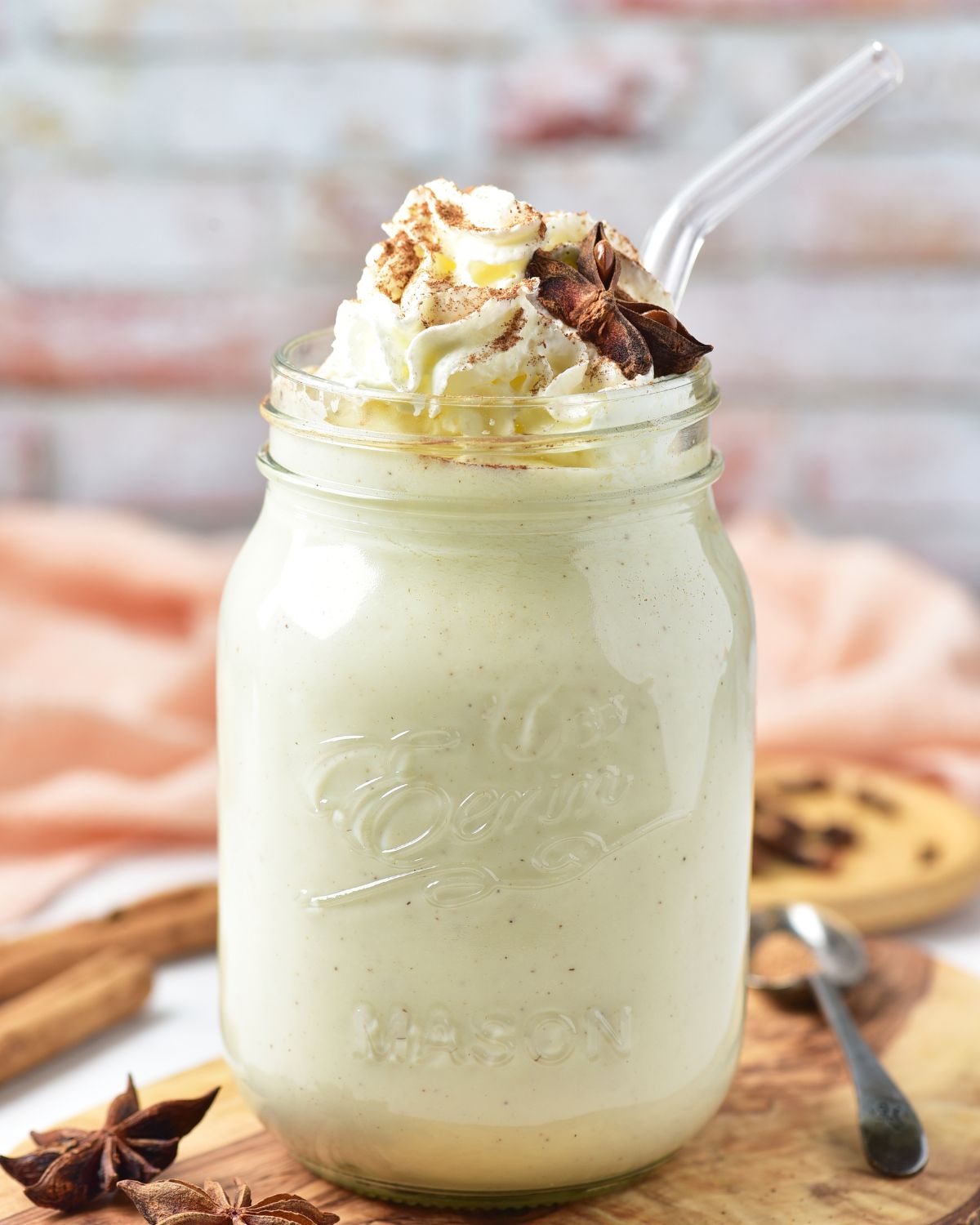
Stir before serving. Pour into glasses and garnish with a sprinkle of ground cinnamon or nutmeg and, if desired, a whole star anise for decoration. Serve cold; you can also add a splash of rum, bourbon, or brandy for an adult version.
Continue to the next page to reveal more tips and tricks