
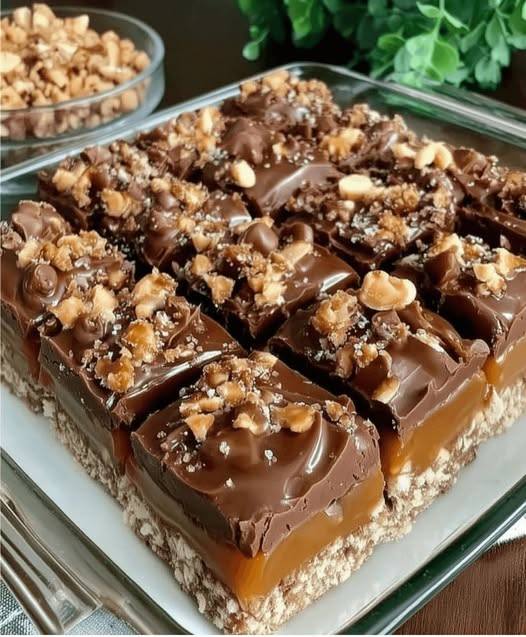
Tips for the Best Homemade Crunch Bars
- Choose the right chocolate. For a traditional candy‑bar feel, milk chocolate chips create a sweeter, creamier result. For a more intense, less sweet bar—or a low‑sugar version—dark chocolate or stevia‑sweetened chips work beautifully.
- Use a thick, sticky sweetener. A syrup‑style sweetener helps bind everything together. For keto or low‑carb, choose a syrup made with stevia, erythritol, or monk fruit; for regular, honey, maple syrup, or brown rice syrup all give good texture.
- Mix up the nuts and seeds. Varying shapes and hardness (like slivered almonds, chopped cashews, pepitas, and sunflower seeds) give more interesting crunch and flavor. Lightly toasting the nuts beforehand can deepen the nutty flavor.
- Adjust sweetness to taste. If you’re using very dark chocolate, taste the melted base before adding the nuts and seeds. If it’s more bitter than you like, whisk in a little extra sweetener until it’s just right for you.
- Press firmly in the pan. Compacting the mixture well is key for bars that don’t crumble when sliced. Take an extra minute to press down firmly with a spatula or measuring cup.
- Use parchment—not foil. Parchment paper makes it much easier to lift and slice the bars, and it prevents sticking. Foil can sometimes tear or stick to the chocolate.
Storage and Make-Ahead
Because these bars are held together with chocolate, coconut oil, and nut butter, they’re best kept chilled so they stay firm.
- Refrigerator: Store sliced bars in an airtight container in the fridge for up to 1–2 weeks. Place parchment or wax paper between layers to prevent sticking. They’ll stay firm but pleasantly chewy straight from the fridge.
- Freezer: For longer storage, freeze the bars in a single layer on a tray. Once solid, transfer them to a freezer bag or container with parchment between layers. They’ll keep well for up to 2–3 months. To serve, let them sit at room temperature for 5–10 minutes so they soften slightly.
- Room temperature: In a cool room, the bars may hold up for a short time (like on a party platter), but coconut oil and chocolate both soften easily with warmth. For everyday storage, the fridge is the safest option to avoid melting or blooming.
These bars are perfect for meal prep. You can make a batch on the weekend, keep them in the refrigerator, and grab one when you need a quick snack or dessert during the week. They also travel well in a lunchbox if you include an ice pack.
Frequently Asked Questions
Can I make these crunch bars completely sugar-free?
Yes. Use stevia‑sweetened or other sugar‑free chocolate chips and a sugar‑free syrup made with stevia, erythritol, or monk fruit. Taste the melted mixture and adjust sweetener to your preference. Just be sure the sweetener you choose is syrup‑like and not a dry granulated type, which won’t bind the bars as well.
Do I have to use almond butter?
No. Almond butter is neutral and works very well, but peanut butter, cashew butter, hazelnut butter, or sunflower seed butter (for nut‑free) all work nicely. Stick with a smooth, well‑stirred butter; very dry or very oily nut butters can affect texture. If using a natural nut butter with oil separation, stir it until perfectly smooth before measuring.
Can I add other mix‑ins besides nuts and seeds?
Absolutely. You can stir in unsweetened coconut flakes, cacao nibs, sugar‑free chocolate chips, or even crushed freeze‑dried berries for a fruity twist. Just keep the total volume of mix‑ins around 3 cups so the bars bind properly.
Why did my bars crumble when I sliced them?
Usually this means there were too many dry mix‑ins for the amount of chocolate base, or the mixture wasn’t pressed firmly enough in the pan. Next time, either slightly reduce the nuts and seeds or increase the chocolate/coconut oil a bit, and be sure to press down firmly before chilling. You can also let the slab sit at room temperature for a few minutes before slicing so it isn’t rock‑hard.
Can I make these bars in a different size pan?
Yes. A 9×9‑inch pan will give slightly thinner bars; a loaf pan will give thicker bars but fewer pieces. If you change pan size, just keep an eye on thickness—very thin layers can be more fragile, while very thick ones may be harder to slice.
Are these bars suitable for kids?
Definitely, as long as there are no nut allergies. Kids often love the chocolate‑bar look and crunchy texture. For younger children, cut the bars into small squares and consider using milder nuts like cashews or almonds and a sweeter chocolate.
Conclusion and Call to Action
Homemade crunch bars are a fantastic example of how easy, no‑bake recipes can feel just as satisfying as store‑bought candy—if not more so. With a base of melted chocolate, almond butter, and a low‑carb sweetener, plus a big handful of crunchy nuts and seeds, you end up with bars that are rich, crisp, and deeply chocolatey, yet simple enough to throw together on a busy afternoon. The recipe is flexible enough to match your pantry and your dietary needs, whether you’re aiming for keto‑friendly, grain‑free, or just a more wholesome dessert.
If you make these homemade crunch bars, share which nuts and seeds you used, what kind of chocolate and sweetener you chose, and how you served them—straight from the fridge, chopped into trail‑mix bites, or tucked into lunchboxes. Leave a comment, rate the recipe, or pass it along to another chocolate lover who needs an easy, customizable crunch bar in their snack rotation.