
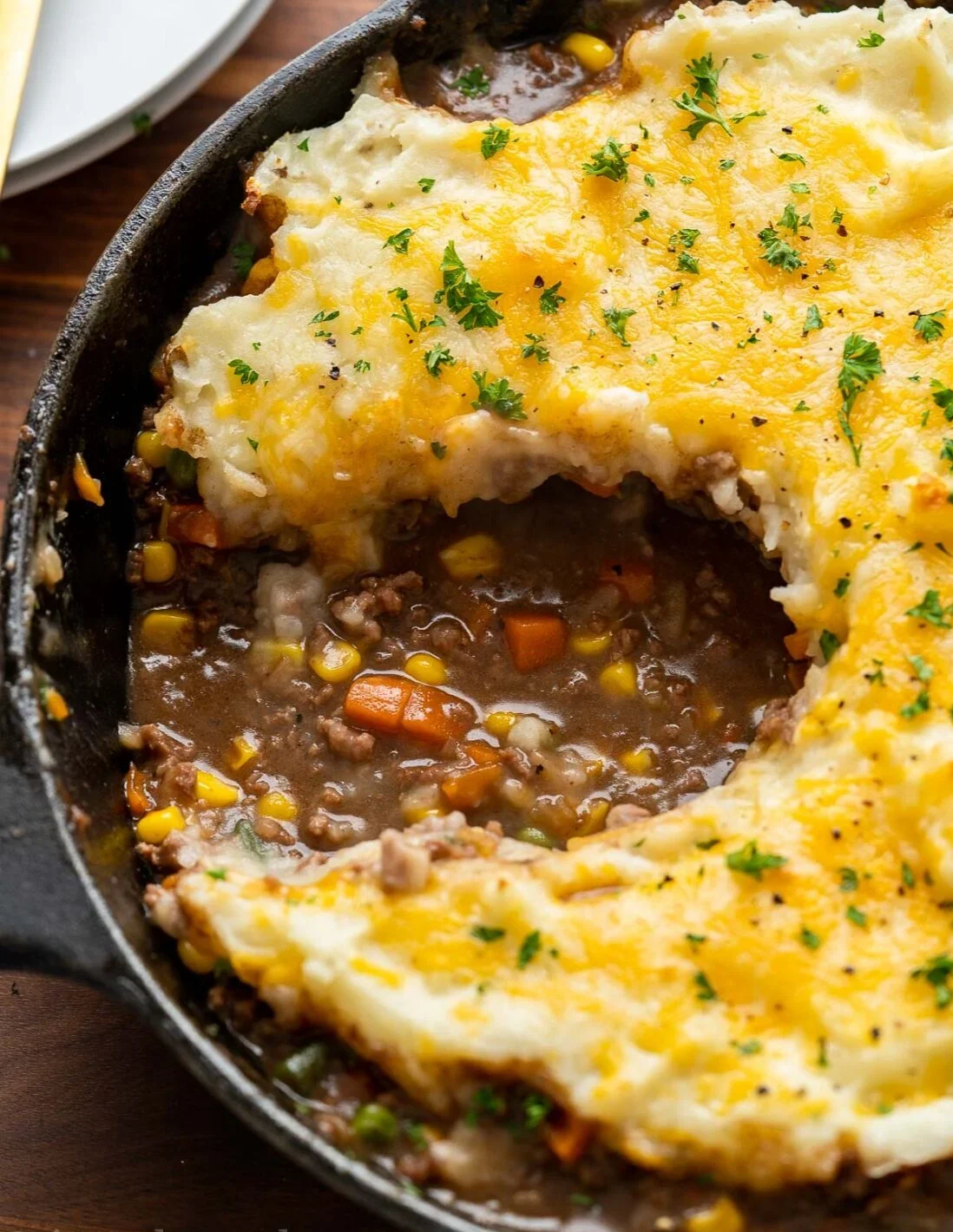
Tips for the Best Ground Beef Cottage Pie
Choosing potatoes and mashing technique
- Potato type: Russet potatoes make especially fluffy mash, while Yukon Golds are creamier and more buttery. Either works; just avoid waxy potatoes that don’t mash as smoothly.
- Dry them out: Draining well and letting the potatoes steam briefly in the empty pot prevents watery mash that might slide into the filling.
- Avoid over‑mixing: Mash by hand rather than with a mixer; over‑worked potatoes can turn gluey. Add milk gradually until you hit a spreadable but firm consistency.
Flavor boosters
- Cheese in the mash: For extra richness, stir a small handful of cheddar directly into the potatoes before spreading them on top, as many cottage pie variations do.
- Worcestershire or tomato paste: If you like a deeper, more complex gravy, whisk in a teaspoon or two of Worcestershire sauce or tomato paste along with the broth; both are common upgrades in cottage and shepherd’s pie recipes.
- Fresh herbs: Finishing with chopped parsley or thyme on the baked pie adds freshness that balances the richness of the beef and potatoes.
Texture and assembly tips
- Thickness of filling: The beef mixture should be thick enough that a spoon dragged through leaves a brief trail. If it seems soupy, simmer a few extra minutes before topping with potatoes so the pie isn’t watery.
- Rough up the potatoes: Use a fork to make little peaks and ridges on the surface of the mashed potatoes; these brown beautifully in the oven, giving appealing texture.
- Rest before slicing: Like lasagna, cottage pie benefits from a short rest after baking; hot gravy firms up slightly, making it easier to scoop neat portions.
Variations
This basic cottage pie is easy to adapt depending on your tastes or what’s in your pantry.
- Traditional shepherd’s pie twist: Substitute ground lamb for ground beef to move closer to a classic shepherd’s pie, keeping the same onion soup shortcut and vegetables.
- Extra‑veggie version: Sauté diced fresh onions, carrots, and celery before browning the beef, then add frozen peas and corn at the end; this mirrors more traditional recipes that layer aromatics under the soup‑mix flavor.
- Cheesy crust upgrade: Mix Parmesan with the cheddar or sprinkle a little over the top for a sharper, more deeply browned crust.
- Gluten‑free adaptation: Use a gluten‑free onion soup mix and substitute cornstarch or a gluten‑free all‑purpose blend for the flour. Ensure your broth is gluten‑free as well.
Make‑Ahead, Storage, and Freezing
One of the best things about cottage pie is how well it stores and reheats.
- Make‑ahead: Assemble the pie completely, cover tightly, and refrigerate for up to 24 hours before baking. Add a few extra minutes to the bake time if starting from cold.
- Leftovers: Store cooled leftovers in an airtight container in the fridge for 3–4 days. Reheat single portions in the microwave or rewarm the whole dish in the oven at 350°F (175°C) until hot in the center.
- Freezer‑friendly: Many cottage pie recipes freeze well. Cool the assembled, unbaked pie, wrap tightly in plastic and foil, and freeze up to 2–3 months. Bake from frozen at 375–400°F, covered for the first part to thaw and heat through, then uncovered to brown the top.
FAQs
Is this cottage pie or shepherd’s pie?
Technically, “cottage pie” uses beef and “shepherd’s pie” uses lamb, though the names are often swapped in everyday cooking. Because this recipe uses ground beef, it is correctly called cottage pie.
Can I use fresh vegetables instead of frozen?
Yes. Sauté diced carrots and perhaps celery with the beef until they start to soften, then add peas and corn near the end so they don’t overcook. The total vegetable volume should stay similar so the gravy‑to‑filling balance remains right.
What size pan works best?
A 10‑inch oven‑safe skillet or a 9×9‑inch square casserole dish is ideal for the amounts listed. If you double the recipe, use a 9×13‑inch dish and add a few minutes to the bake time to ensure the center gets hot and bubbly.
How do I prevent the potatoes from sinking into the filling?
Make sure the gravy is nicely thickened before topping, and keep the potatoes on the firmer side—creamy but not runny. Spreading them gently and evenly over a slightly cooled filling also helps them sit on top rather than mixing in.
Ground Beef Cottage Pie takes everyday ingredients—ground beef, pantry soup mix, frozen veggies, and potatoes—and transforms them into a bubbling, cheesy, layered casserole that feels like a hug in a dish. With simple steps, a few smart shortcuts, and plenty of make‑ahead flexibility, it earns a regular spot in the comfort‑food rotation.