
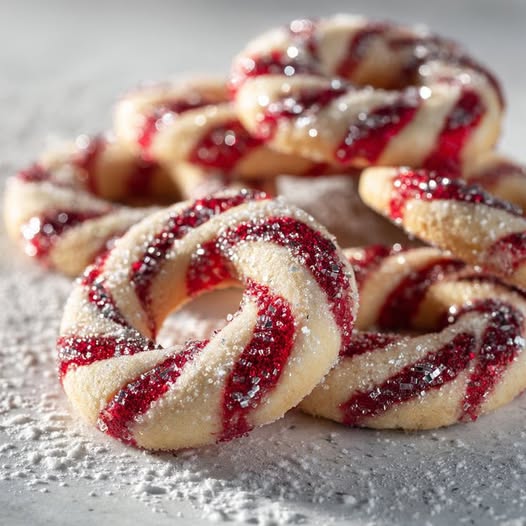
Ingredients and why they matter
- 2 1/2 cups all-purpose flour — provides structure so the cookies hold their shape while staying tender.
- 1/2 teaspoon salt — balances sweetness and enhances the buttery flavor.
- 1 teaspoon baking powder — gives slight lift and softness, preventing a hard, dense cookie.
- 1 cup unsalted butter, softened — adds richness, moisture, and a tender crumb typical of butter-based holiday cookies.
- 1 cup powdered (confectioners’) sugar — dissolves smoothly into the dough for a fine, melt-in-your-mouth texture common in candy cane and shortbread-style cookies.
- 1 large egg — binds the dough and adds moisture for a cohesive, pliable texture.
- 1 1/2 teaspoons vanilla extract — builds a warm, sweet background flavor under the peppermint.
- 1 teaspoon peppermint extract — the star flavor for candy-cane cookies; adjust to taste based on preference.
- Red gel food coloring — provides vibrant red stripes without thinning the dough, as most modern candy cane cookie recipes recommend.
- 1/4 cup crushed candy canes (plus extra for topping) — adds festive crunch, extra peppermint, and classic candy-cane look.
- Optional: 1 tablespoon granulated sugar — for rolling if you want a slight sparkle on the exterior, a trick some recipes use for subtle crunch.
This ingredient list closely mirrors many candy cane cookie and peppermint roll cookie recipes that use a powdered-sugar butter dough, peppermint flavoring, and colored dough strands twisted together.
Step-by-step instructions
1. Prep and preheat
Preheat your oven to 350°F (175°C). Line two baking sheets with parchment paper or silicone baking mats to prevent sticking and encourage even baking, as is commonly recommended for shaped butter cookies.
2. Cream butter and sugar
In a large mixing bowl, beat the softened unsalted butter and powdered sugar together until light and creamy, about 2 minutes, scraping down the bowl as needed. This creaming step incorporates air and dissolves the sugar, which helps create a tender, delicate cookie crumb similar to other holiday butter cookies.
3. Add egg and flavors
Add the egg, vanilla extract, and peppermint extract to the creamed mixture. Beat until the mixture is smooth and fully combined. Many candy cane cookie recipes emphasize adding the peppermint at this stage so it disperses evenly through the dough without concentrating in one area.
4. Combine dry ingredients
In a separate bowl, whisk together the flour, salt, and baking powder until well blended. Gradually add the dry ingredients to the butter mixture, mixing on low just until a soft dough forms and no visible streaks of flour remain. Avoid overmixing, which can toughen the cookies—a tip frequently given for rolled and shaped Christmas cookies.
If using finely crushed candy canes inside the dough (rather than only on top), gently fold in about 1/4 cup at this stage.
5. Divide and color the dough
Divide the dough into two equal portions. Leave one portion plain for the white stripes. Add a few drops of red gel food coloring to the second portion and gently knead or mix until the color is evenly distributed. Gel food coloring is widely recommended in candy cane cookie recipes because it provides vivid color without adding excess liquid that could make the dough sticky.
6. Shape the candy canes
Working with small portions of dough at a time, pinch off about 1 teaspoon of the white dough and roll it into a long, thin rope about 4–5 inches long on a lightly floured or parchment-covered surface. Do the same with an equal amount of the red dough, forming a rope of similar length.
Place one red rope and one white rope side by side. Gently press them together, then twist them lengthwise to create a spiral pattern. Carefully transfer the twisted rope to a prepared baking sheet and bend one end into a hook shape to form a candy cane. Repeat with remaining dough, spacing cookies a couple of inches apart. Many classic candy cane cookie recipes suggest rolling ropes evenly so cookies bake uniformly and keep their defined stripes.
For quicker shaping, some bakers roll longer ropes, twist them, and then cut them into shorter pieces, bending each piece into a cane shape, an approach also mentioned in some holiday cookie guides.
7. Chill briefly if needed
If the dough becomes too soft as you work, place the shaped cookies on the baking sheets in the refrigerator for about 10–15 minutes before baking. Chilling helps keep the edges clean and the swirls distinct, a common tip in shaped butter cookie and candy cane cookie recipes.
8. Optional: add crunchy topping
If desired, gently press a few crushed candy cane pieces onto the tops of the shaped cookies for added texture and peppermint flavor. Crush the candy canes fairly finely so large shards don’t cut into the dough or melt into uneven puddles; this is similar to how other recipes recommend using finely crushed candy canes on cookies and bars.
9. Bake
Bake the cookies in the preheated oven for 8–10 minutes, or until the edges are set and just barely starting to turn a light golden color while the tops remain pale. Overbaking is discouraged in most candy cane cookie recipes because it can dry them out and make them too crisp. The cookies will continue to firm up as they cool.
10. Cool and store
Let the cookies cool on the baking sheet for 3–4 minutes to firm up, then transfer them to a wire rack to cool completely. Once cool, store in an airtight container at room temperature for up to 5 days, or freeze for up to 3 months, similar to guidelines for other holiday butter cookies and peppermint cookies.
Continue to the next page to reveal more tips and tricks