
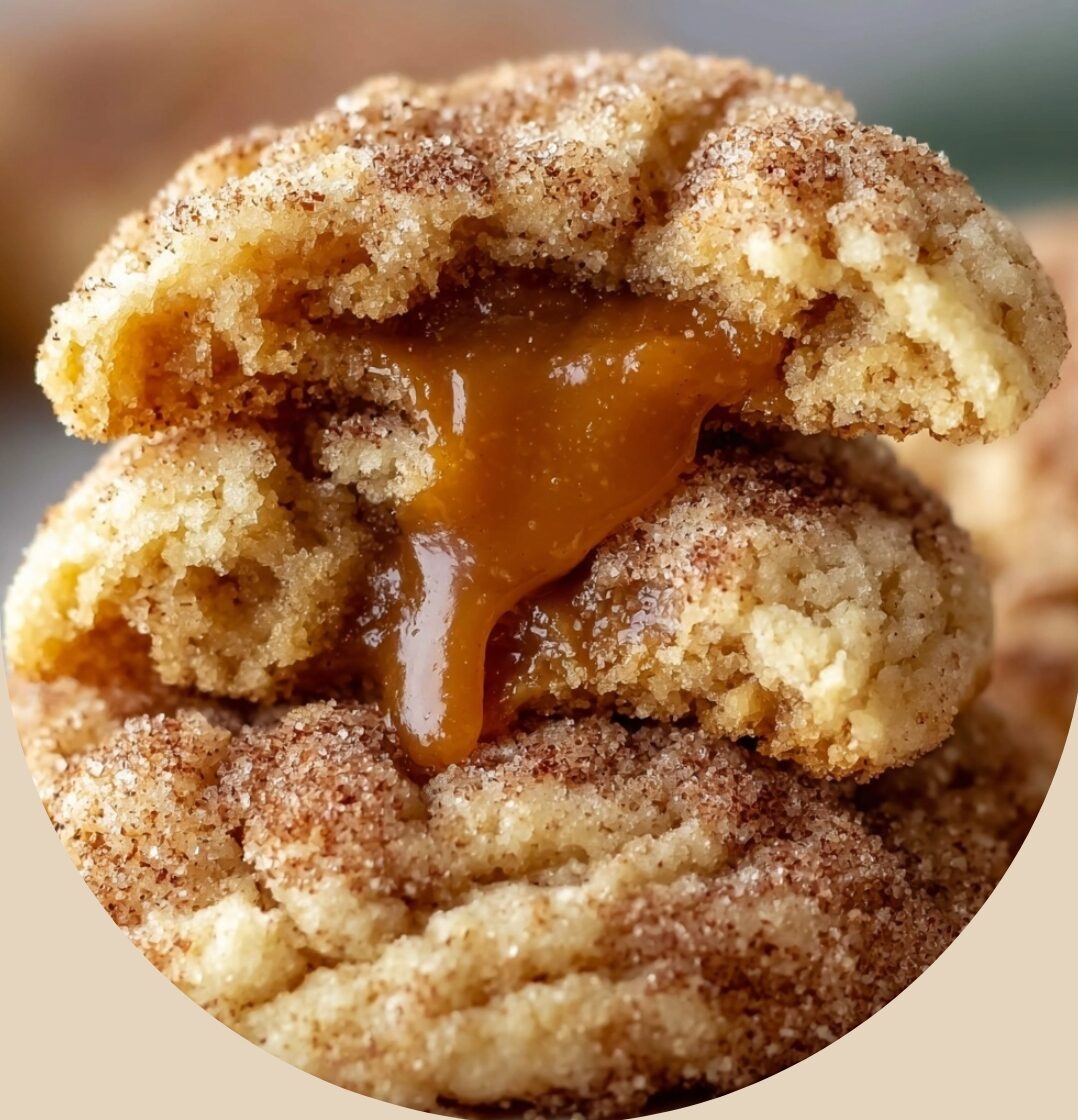
Cookie Dough
- 1 cup (2 sticks / 226 g) unsalted butter, softened
Provides richness, tenderness, and that classic buttery cookie flavor. Softened butter creams smoothly with sugar and helps create a light, soft crumb. - 3/4 cup packed light brown sugar
Adds caramel-like flavor and moisture, contributing to a chewy, soft interior. - 1/4 cup granulated sugar
Balances sweetness, helps with structure, and aids in light browning. - 1 large egg, at room temperature
Binds the dough, adds moisture, and helps the cookies set properly without becoming dry. - 1 teaspoon pure vanilla extract
Enhances the buttery notes and rounds out the flavor so the cinnamon and caramel shine. - 2 1/4 cups all-purpose flour
Provides structure so the cookies hold their shape around the caramel centers while staying soft. - 1/2 teaspoon baking soda
Helps the cookies rise and spread to the right thickness without becoming cakey. - 1/2 teaspoon ground cinnamon
Adds warm spice throughout the dough; complements the brown sugar and caramel. - 1/4 teaspoon salt
Balances sweetness and boosts all the flavors.
Caramel Center & Coating
- 12–14 soft caramel candies, unwrapped (or 1/2 cup caramel baking bits)
Create the gooey caramel center. Soft caramels melt into a luscious pool inside the cookie. - 2 tablespoons brown sugar
Used in the coating; adds caramel flavor and a slightly deeper sweetness than white sugar alone. - 1 teaspoon ground cinnamon
For the coating; gives a snickerdoodle-style cinnamon sugar crust. - 1 tablespoon granulated sugar (optional, for sparkle)
Adds visual sparkle and a bit of extra crunch in the coating.
Optional enhancements
- Pinch of flaky sea salt (for topping warm cookies)
Turns these into salted caramel cookies and cuts through the sweetness. - 1/2 teaspoon espresso powder (added with dry ingredients)
Deepens the brown sugar and caramel flavors without making the cookies taste like coffee. - 1/4 cup chopped toasted pecans or walnuts (folded into the dough or pressed on top)
Adds crunch, nuttiness, and a bakery-style finish.
Step-by-step instructions
1. Preheat and prepare
Preheat the oven to 350°F (175°C). Line two baking sheets with parchment paper or silicone baking mats. This helps prevent sticking, encourages even baking, and makes cleanup easier.
Unwrap the caramel candies and keep them nearby. Set out your mixing bowls, spatula, whisk, and cookie scoop (if using) so everything is within reach before you start.
2. Cream butter and sugars
In a large mixing bowl, add the softened unsalted butter, 3/4 cup packed light brown sugar, and 1/4 cup granulated sugar. Using an electric mixer on medium speed, beat the mixture for 2–3 minutes, until it becomes pale, creamy, and fluffy.
This creaming step is important—it incorporates air into the dough and helps the sugar begin to dissolve, which leads to a softer, more tender cookie. Scrape down the sides and bottom of the bowl once or twice so no pockets of butter remain.
3. Add egg and vanilla
Add the room-temperature egg and the teaspoon of vanilla extract to the creamed butter and sugar. Beat again until the mixture is smooth, thick, and fully combined. Scrape the bowl as needed to make sure everything is homogeneous and there are no streaks.
At this point, your base mixture should look glossy and cohesive, forming the foundation for a sturdy but soft cookie dough.
4. Combine dry ingredients
In a separate bowl, whisk together the 2 1/4 cups all-purpose flour, 1/2 teaspoon baking soda, 1/2 teaspoon ground cinnamon, 1/4 teaspoon salt, and the optional 1/2 teaspoon espresso powder (if using).
Whisking the dry ingredients first ensures that the baking soda, salt, and spices are evenly dispersed so you don’t end up with pockets of baking soda or cinnamon in the finished cookies.
5. Bring the dough together
Gradually add the dry mixture to the wet mixture. Mix on low speed or switch to a spatula and fold until the dough just comes together. Stop mixing as soon as you no longer see dry flour streaks.
The dough should be soft and slightly thick—easy to scoop and shape, but not sticky. Overmixing at this stage can develop too much gluten and lead to tougher cookies, so aim for just combined.
If you’re adding chopped toasted nuts to the dough (rather than just on top), fold them in now.
6. Shape and fill with caramel
Use a medium cookie scoop or a tablespoon to portion out dough—about 2 tablespoons per cookie will give you a generous size that can comfortably hold a caramel.
Place one portion of dough in your hand and flatten it slightly into a disc. Place one soft caramel candy (or a small cluster of caramel bits) in the center of the disc. Carefully fold the dough up and around the caramel, pinching and pressing to completely seal it inside. Roll the filled dough into a smooth ball.
It’s important that the caramel is fully enclosed so it doesn’t leak out during baking. If you see any cracks or thin spots, gently pinch and smooth more dough over them.
7. Make the cinnamon-sugar coating
In a small bowl, combine 2 tablespoons brown sugar, 1 teaspoon ground cinnamon, and the optional 1 tablespoon granulated sugar. Stir until the mixture is well blended and free of lumps.
This mixture will coat the outside of the dough balls, creating a fragrant crust that caramelizes lightly in the oven.
8. Coat the cookies
Roll each caramel-filled dough ball in the cinnamon-sugar mixture until all sides are evenly coated. Place the coated dough balls on the prepared baking sheets, spacing them a couple of inches apart to allow for spreading.
If you’re planning to add nuts only on top, you can press a few pieces of chopped toasted pecans or walnuts lightly into the top of each sugared dough ball now.
9. Bake
Bake the cookies in the preheated 350°F (175°C) oven for about 9–11 minutes. The cookies are done when:
- The edges look set and lightly golden.
- The tops are puffed and may show small cracks.
- The centers still look slightly soft and not fully dry.
Avoid baking until fully browned all over; pulling them when they still look a touch underbaked in the center is what keeps the interior soft and the caramel gooey rather than hard.
If you’re baking on two racks, rotate the pans halfway through baking for even results.
10. Cool and finish
Remove the baking sheets from the oven and let the cookies cool on the pan for 5–10 minutes. The cookies will continue to set as they sit, and the caramel inside will thicken slightly while remaining soft and stretchy.
While the cookies are still warm, sprinkle a tiny pinch of flaky sea salt onto each one if you like a salted caramel contrast.
After they’ve had a chance to firm up on the pan, use a spatula to transfer the cookies carefully to a wire rack to cool completely—or serve them while they’re still warm and gooey.
Continue to the next page to reveal more tips and tricks