
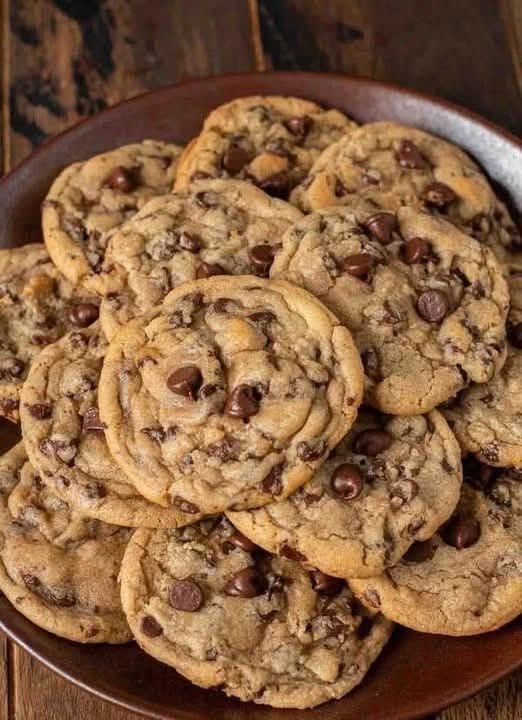
Ingredients and how they work
- 1 cup packed brown sugar
- 1 cup butter, softened
- 1/2 cup granulated sugar
- 2 large eggs
- 2 teaspoons vanilla extract
- 2 1/2 cups all-purpose flour
- 1/2 teaspoon salt
- 1 teaspoon baking soda
- 2 cups semi-sweet chocolate chips (or more, for extra chocolate)
- Optional: 1/2 cup chopped walnuts or pecans
Brown sugar and granulated sugar together are standard in chewy chocolate chip cookie formulas, with brown sugar providing moisture and that caramel-like depth that many bakers associate with the “best” cookies. Using more brown sugar than white, as in this recipe, is a hallmark of many soft cookie recipes because the extra molasses keeps the crumb moist and bendy rather than crisp.
Softened butter creamed with sugar builds structure and flavor. Creaming traps air in the dough, which helps cookies rise and spread in a controlled way, and pure butter gives richer flavor than shortening, aligning with advice from multiple best-cookie guides. Eggs add moisture and bind the dough, and vanilla gives that warm bakery aroma that nearly every chocolate chip cookie recipe uses.
All-purpose flour, baking soda, and salt are the classic trio in most American chocolate chip cookies, supplying structure, lift, and balanced sweetness. Semi-sweet chocolate chips are the default choice in many of the highest-rated recipes because they provide good chocolate flavor without making the cookie cloyingly sweet. Nuts are optional, but many “best ever” recipes note that toasted walnuts or pecans add welcome crunch and contrast.
Step-by-step instructions
Step 1: Cream the butter and sugars
In a large mixing bowl, cream together the softened butter, packed brown sugar, and granulated sugar until light and fluffy, about 2–3 minutes with a hand mixer or stand mixer on medium speed. Proper creaming is repeatedly emphasized in cookie tutorials because it helps dissolve some of the sugar and creates tiny air bubbles that contribute to an even, tender crumb. Scrape down the sides and bottom of the bowl once or twice so no butter pockets remain.
Step 2: Add eggs and vanilla
Add the eggs one at a time, beating well after each addition until the mixture is smooth and emulsified. Then add the vanilla extract and mix until combined. This step mirrors the method in many chewy cookie recipes, where eggs and vanilla are added after creaming to build a cohesive base that holds the flour and chips evenly.
Step 3: Combine the dry ingredients
In a separate bowl, whisk together the all-purpose flour, baking soda, and salt. Slowly add this dry mixture to the wet ingredients, mixing on low speed just until the flour is incorporated. Overmixing at this stage is discouraged across nearly all cookie resources because it can develop gluten and produce tougher, less tender cookies. Stop as soon as no visible streaks of dry flour remain.
Step 4: Add the chocolate chips (and nuts)
Use a spatula or wooden spoon to fold in the semi-sweet chocolate chips and, if you’d like, the chopped walnuts or pecans. Folding by hand prevents overworking the dough and ensures the chips are distributed evenly. Some popular recipes also suggest reserving a small handful of chips to press onto the tops of the dough balls just before baking, which creates that bakery-style look with visible chocolate on top.
Step 5: Chill the dough (optional but strongly recommended)
Cover the bowl and refrigerate the dough for 30–60 minutes. Chilling is one of the most frequently cited “secrets” in modern cookie recipes and baking articles: it allows the flour to hydrate, firms up the butter, and leads to thicker cookies with more concentrated flavor. Articles and tests from baking sites and magazines show that even a short chill can improve spread control and chewiness, while longer chilling (up to 24–72 hours) deepens flavor even more.
If you are pressed for time, you can bake immediately, but chilling nudges the cookies closer to that “best ever” texture.
Step 6: Bake to perfection
Preheat the oven to 350°F (175°C). Line baking sheets with parchment paper or silicone baking mats, which most cookie recipes recommend for preventing sticking and promoting even browning.
Using a cookie scoop or spoon, drop rounded portions of dough (about 1 1/2 tablespoons each) onto the prepared baking sheets, spacing them a couple of inches apart to allow spreading. If you saved extra chocolate chips, press a few onto the tops of the dough mounds now.
Bake for 9–11 minutes, or until the edges are golden brown and the centers still look slightly soft and pale. Many of the most popular chewy cookie recipes emphasize this visual cue: take cookies out when they appear just a bit underbaked in the center, because they will continue to set on the hot tray. Overbaking is one of the most common reasons cookies turn out crisp instead of chewy.
Step 7: Cool and enjoy
Allow the cookies to cool on the baking sheet for about 5 minutes so they can finish setting, then transfer them to a wire rack to cool completely. Letting them rest on the tray is a standard technique in soft-cookie recipes, giving you a set edge and a chewy center instead of a dry interior. Once they’ve cooled enough to handle, pour a glass of cold milk and enjoy while still slightly warm and gooey, or let them cool fully for storage.
The science behind the “best ever” texture
Baking writers and food science sources repeatedly point to a few key factors that separate good cookies from great ones:
- More brown sugar than white: Brown sugar’s molasses attracts and holds moisture, contributing to chew and richer flavor, which is why many top-rated recipes lean heavily on it.
- Proper creaming: Thorough creaming of butter and sugars builds a better internal structure and promotes even baking, a step emphasized in professional and home baking guides alike.
- Chilling the dough: Chilling solidifies the fat and allows flavors to meld; controlled tests by baking companies and food writers show that chilled dough produces thicker, darker, and more flavorful cookies.
- Underbaking slightly: Removing cookies when edges are set and centers look slightly underdone is a consistent recommendation in chewy-cookie recipes because carryover heat finishes the bake without drying them out.
This recipe aligns with those principles, which is why the finished cookies resemble many of the most-loved “best ever” chocolate chip cookies online.
Continue to the next page to reveal more tips and tricks