
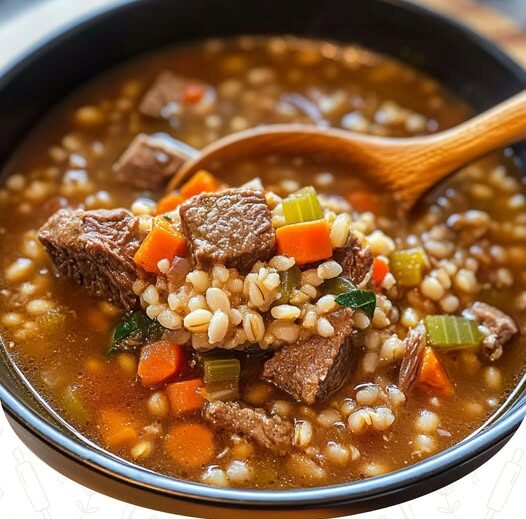
Tips for the Best Beef Barley Soup
Small technique adjustments and ingredient choices can dramatically improve the final bowl.
Choosing and Handling the Beef
- Opt for marbled cuts: Chuck roast, blade roast, or labeled “beef stew meat” with some visible fat work best. These cuts have enough connective tissue to become tender and flavorful with slow cooking. Very lean beef may remain tough.
- Cut even pieces: Aim for cubes roughly 1/2–3/4 inch wide. Uniform size helps the beef cook at the same rate, preventing some pieces from drying out while others remain chewy.
- Do not skip browning: It can be tempting to hurry, but deep browning—not just gray color—sets up a complex, savory base. Browning in batches ensures the pan stays hot and the meat sears instead of steams.
Working with Barley
- Pearl vs. hulled barley: Pearl barley is more common in soup recipes because it cooks in under an hour; hulled barley is more nutritious but can take significantly longer, so simmering time should be extended accordingly.
- Rinsing matters: Rinsing barley removes dust and some surface starch, helping the broth remain clear instead of turning overly thick and gummy.
- Broth absorption: Barley continues to soak up liquid even after the soup cools. When reheating leftovers, it is often helpful to add a splash of broth or water to loosen the consistency.
Flavor and Texture Enhancers
- Layered seasoning: Add some salt during browning, more when adding broth, and adjust at the end. Seasoning gradually ensures every component is well flavored without oversalting.
- Herb options: Thyme is classic, but bay leaf, parsley stems, and even a small rosemary sprig can enhance the flavor. Use whole sprigs so they are easy to fish out before serving.
- Umami boosters: A spoonful of tomato paste, a dash of Worcestershire sauce, or even a splash of soy sauce can add savory depth, particularly if you are using a milder broth.
Variations and Make‑Ahead Ideas
Beef Barley Soup is flexible and adapts well to dietary needs, pantry limitations, and cooking methods.
Slow Cooker Beef Barley Soup
Many home cooks favor the slow cooker for beef barley because it turns inexpensive cuts fork‑tender with very little hands‑on time.
- Brown the beef and sauté vegetables as directed, then transfer everything to a slow cooker.
- Add barley, broth, herbs, and seasonings.
- Cook on low for 7–8 hours or on high for about 4 hours, until beef and barley are tender.
The low, steady heat of a slow cooker is especially forgiving if you will be away from the kitchen all day.
Instant Pot or Pressure Cooker Version
Pressure cookers shorten cooking time dramatically while still producing rich flavor.
- Use the sauté function to brown beef and vegetables.
- Add barley, broth, and seasonings.
- Cook at high pressure for about 20–25 minutes, then allow a natural release for 10–15 minutes before venting.
Check barley and beef for tenderness and simmer briefly on sauté if they need a bit more time.
Vegetable‑Boosted Version
To increase the veggie content or stretch the soup further:
- Add diced potatoes, parsnips, or turnips in the last 20–25 minutes of simmering.
- Stir in frozen peas or chopped green beans during the last 5–10 minutes for color and sweetness.
Lighter or Health‑Conscious Modifications
- Use extra‑lean beef and skim visible fat from the surface during cooking or after chilling.
- Increase the quantity of vegetables and slightly reduce the barley for a lower‑carb approach.
- Replace part of the beef broth with vegetable broth for a gentler flavor, as some lighter recipes do.
FAQs About Beef Barley Soup
How far in advance can I make Beef Barley Soup?
Beef Barley Soup keeps well for 3–4 days in the refrigerator when stored in an airtight container. Many cooks recommend making it a day ahead because the flavors continue to meld and improve overnight. When reheating, add a little extra broth or water if the barley has thickened the soup too much.
Can I freeze Beef Barley Soup?
Yes. This soup freezes nicely, though the barley may soften slightly after thawing. Cool the soup completely, portion into freezer‑safe containers or bags, and freeze for up to 3 months. Thaw in the refrigerator overnight and reheat gently on the stovetop, adding extra broth as needed to restore the desired consistency.
What is the best way to reheat leftovers?
Reheat on the stovetop over medium‑low heat, stirring occasionally, until hot. If using a microwave, heat in bursts, stirring between intervals so the barley and beef warm evenly. Always bring leftovers to at least a gentle simmer to ensure food safety.
Can I substitute another grain for barley?
If barley is unavailable or you need a gluten‑free option, you can use farro, brown rice, or small pasta like orzo near the end of cooking. Keep in mind that different grains need different cooking times; add them late enough that they cook through but do not turn mushy.
Why is my beef still tough?
Tough beef usually means it has not simmered long enough. Continue cooking at a gentle simmer; many stew cuts become tender only after 60–90 minutes. Make sure the heat is low so the soup bubbles lazily rather than boiling vigorously, which can tighten the meat.
Beef Barley Soup brings together rich broth, meltingly tender beef, chewy barley, and sweet vegetables in a single pot that feels timeless and deeply satisfying. With simple ingredients and patient simmering, it delivers layered flavor and hearty texture that make it a staple in many households, whether served fresh off the stove, packed into thermoses for lunch, or pulled from the freezer on a busy night.