
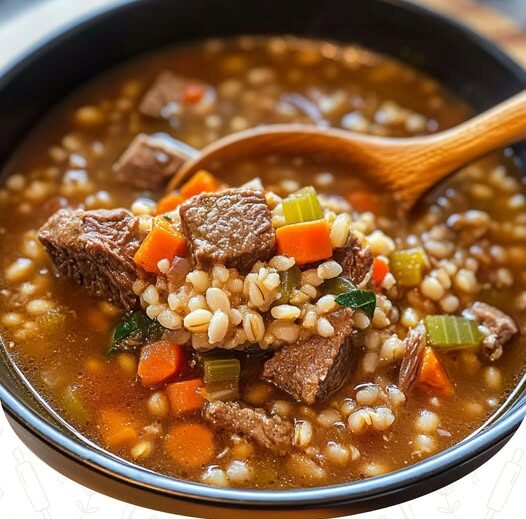
Ingredient Notes
- Stew beef or chuck roast: Well‑marbled cuts shine in soups because long, gentle cooking melts connective tissue and transforms tough cubes into fork‑tender bites. Leaner cuts may turn dry or stringy, so if using them, shorten the simmer slightly.
- Pearl barley: Pearl barley has had some of its outer husk removed, so it cooks faster than hulled barley but still provides chewy texture and a subtle, nutty flavor. It also releases starch that helps thicken the broth naturally.
- Beef broth: Choosing a good‑tasting, low‑sodium broth gives control over seasoning; you can always add salt at the end, but it is hard to fix an overly salty soup. Some recipes even mix beef and chicken broth for a slightly lighter flavor.
- Tomato paste and Worcestershire: These optional ingredients act like flavor boosters, adding umami and gentle acidity that make the broth taste richer without heavy cream. Many modern beef barley recipes include one or both.
Step‑by‑Step Instructions
1. Brown the Beef
Browning the meat first is crucial. Developing a dark crust on the beef pieces builds a foundation of flavor that carries through the whole pot.
- Pat the beef dry with paper towels to help it sear instead of steam.
- Season all over with salt and pepper.
- Heat 1 tablespoon olive oil in a large heavy pot or Dutch oven over medium‑high heat until shimmering.
- Add the beef in a single layer, working in two batches if needed so the pieces are not crowded.
- Cook, turning occasionally, until well browned on several sides, 5–7 minutes.
- Transfer the browned beef to a plate and set aside, leaving the browned bits (fond) in the pot.
Taking the time to sear the beef instead of simply boiling it in broth is one of the biggest differences between flat soup and a rich, flavorful one. The fond clinging to the bottom of the pot will dissolve later into the broth, contributing depth and color.
2. Sauté the Aromatics
With the beef out of the pot, the next step is to build layers of flavor with aromatic vegetables.
- If the pot looks dry, add a small drizzle of additional oil.
- Add the chopped onion, diced carrots, and diced celery.
- Cook over medium heat, stirring occasionally, until the vegetables soften and the onion becomes translucent, about 5–7 minutes.
- Stir in the minced garlic and cook for 30–60 seconds, just until fragrant; garlic burns quickly, so do not walk away.
This trio of onion, carrot, and celery—often called mirepoix—is a backbone of many soups and stews, providing sweetness and aromatic flavor that complement the beef. Let the vegetables pick up some of the browned bits as they soften.
3. Deglaze and Build the Broth
Now it is time to turn those browned bits and softened vegetables into a flavorful broth.
- Return the browned beef and any accumulated juices on the plate to the pot.
- Stir in the tomato paste, if using, and cook for 1–2 minutes to caramelize it slightly; this step rounds off its acidity.
- Pour in about 1 cup of the beef broth and use a wooden spoon to scrape up the fond stuck to the bottom of the pot.
- Add the remaining broth, thyme, bay leaf, paprika if using, and a splash of Worcestershire sauce.
- Bring the mixture up to a gentle boil.
Deglazing with broth pulls the fond into the liquid, enriching both color and taste. Using herbs and optional seasonings at this stage means they have plenty of time to infuse the soup as it simmers.
4. Add Barley and Simmer
Barley needs time to absorb liquid and become pleasantly chewy. Simmering it along with the beef is efficient because both benefit from long, low cooking.
- Rinse the pearl barley in a fine‑mesh sieve under cool running water, stirring with your fingers to remove any dust or excess starch.
- Stir the rinsed barley into the pot.
- Once the soup returns to a simmer, reduce the heat to low or medium‑low.
- Partially cover the pot with a lid, leaving it slightly ajar to allow some steam to escape.
- Simmer gently for 45–60 minutes, stirring occasionally, until the barley is tender and the beef is soft enough to cut with a spoon.
If at any point the soup seems too thick or the barley soaks up more liquid than expected, add 1/2 cup of water or broth at a time to reach your desired consistency. The soup should be brothy but substantial, with spoonfuls full of beef, barley, and vegetables.
5. Final Seasoning and Serving
Finishing touches make the difference between a good soup and one that really sings.
- Remove the bay leaf and any thyme stems if you used fresh sprigs.
- Taste the broth and adjust seasoning with additional salt, pepper, or Worcestershire as needed.
- If you prefer a brighter flavor, squeeze in a small amount of lemon juice or add a teaspoon of red wine vinegar; a hint of acidity can lift rich soups without making them taste sour.
- Ladle the hot soup into bowls and garnish with chopped fresh parsley for color and freshness.
Serve the soup with crusty bread, dinner rolls, or even a simple green salad to round out the meal. Leftovers reheat beautifully, and many cooks find the flavor even better on the second day as the barley and beef continue to absorb the broth.
Continue to the next page to reveal more tips and tricks